



Race Fit vs Relaxed Fit: Which Cycling Jersey Is Better for Bigger Men?
For bigger men, choosing a cycling jersey often becomes less about color, pattern, or branding and more about one practical question: what kind of fit is actually going to feel right on the bike?
This is where the conversation usually splits into two camps. On one side, there is race fit: close to the body, more aerodynamic, more compressive, and usually marketed as the performance-first option. On the other side, there is relaxed fit: a little more forgiving, a little less aggressive, and often assumed to be the more comfortable choice.
At first glance, the answer seems obvious. Bigger riders should just choose relaxed fit, and slimmer riders should choose race fit. But in reality, it is not that simple. Some bigger men are perfectly comfortable in a close-fitting jersey when the pattern is right. Others feel restricted even in supposedly more forgiving cuts because the garment is loose in the wrong places and tight in the ones that matter. The real difference is not just tight versus loose. It is whether the jersey works with the body in motion.
That distinction matters because cycling apparel is not static clothing. A jersey has to function in a riding position, over changing terrain, through different intensities, and often across multiple hours. A fit that looks sharp in the mirror but feels tense on the bike is not truly a good fit. Equally, a jersey that feels roomy while standing but flaps, sags, or shifts when pockets are loaded may not be the answer either.
For riders looking for options with more accommodating proportions, this collection of big and tall cycling clothing is a strong place to begin.
Why this question matters more for bigger riders
Fit matters for everyone, but it matters differently for bigger riders because small problems in construction become more obvious, more quickly, and often more consistently over the course of a ride.
A jersey that is slightly too short in the front may still be manageable on a lean rider with a flatter midsection. On a bigger rider, that same jersey may start pulling upward almost immediately. A sleeve that feels snug on one person may feel restrictive on someone with broader upper arms or shoulders. A close-fitting chest panel may look sleek in product photography but become uncomfortable if the zipper begins to bow outward under tension.
This is why broader conversations about cycling jersey fit often miss the point. The issue is not whether bigger riders can wear performance apparel. Of course they can. The issue is whether a given cut has been designed and proportioned well enough to support different body shapes without forcing unnecessary compromises.
The wrong fit does not just affect comfort. It affects confidence, freedom of movement, temperature management, pocket stability, and how much attention a rider has to give to the garment during the ride. The right fit, by contrast, fades into the background.
That is what makes the race fit versus relaxed fit question worth taking seriously.
What race fit actually means
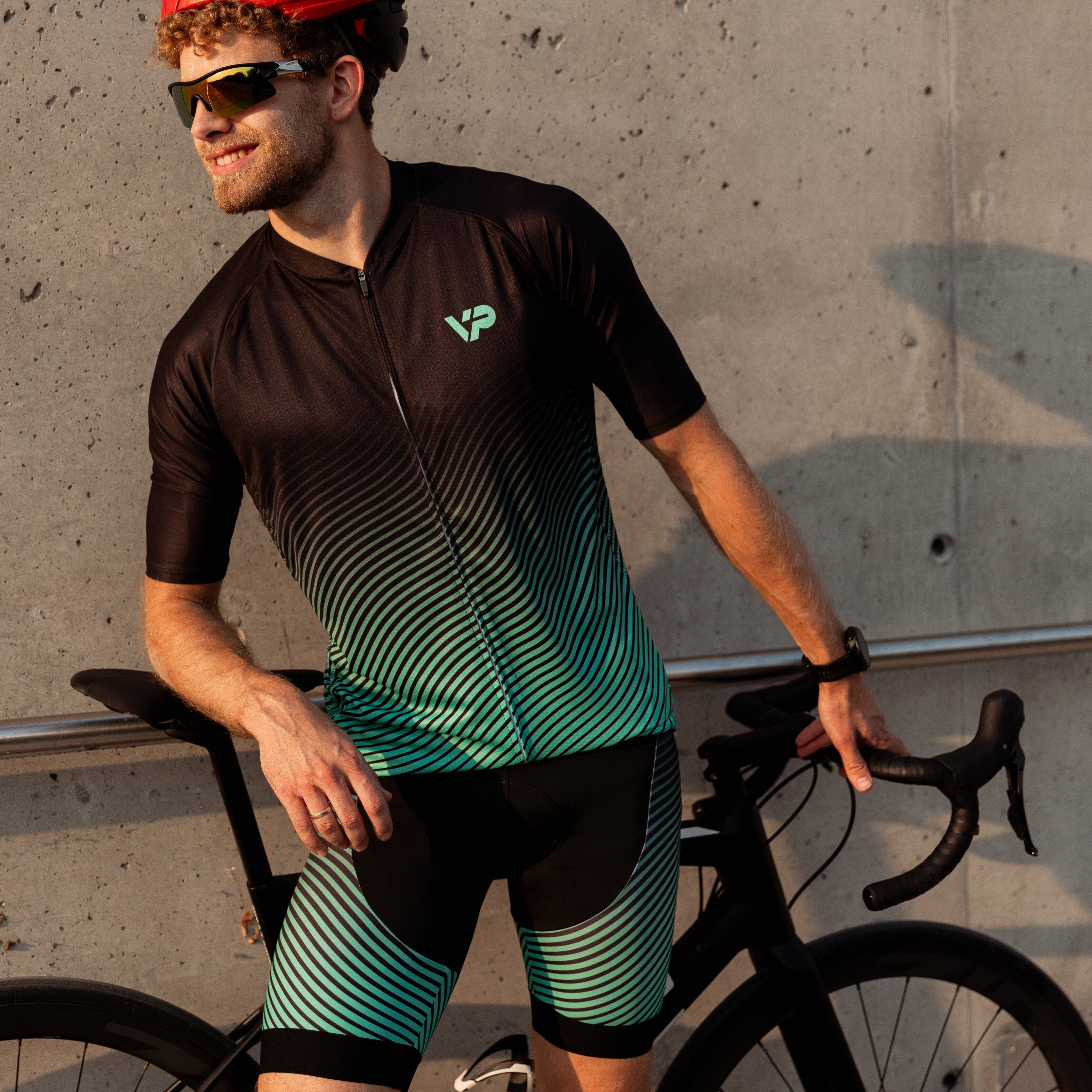
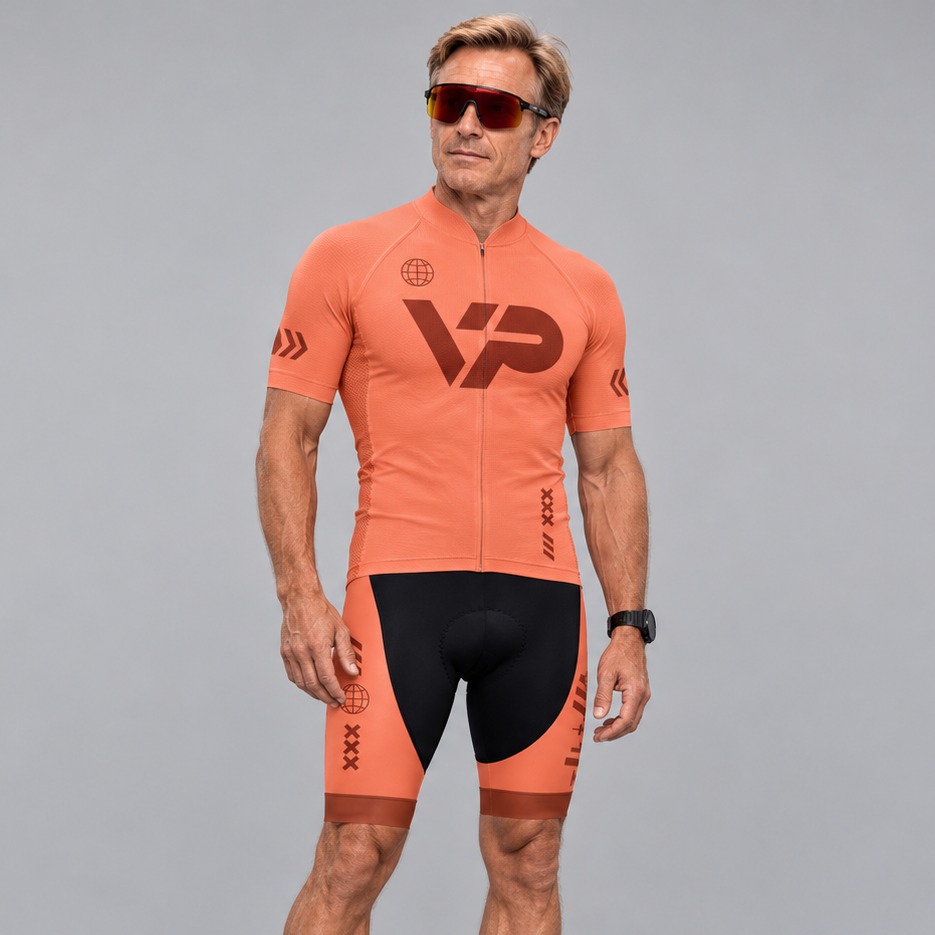
Race fit is often described in simple terms, but the reality is more specific. A race-fit jersey is usually built to sit close to the body with minimal excess fabric. It often features more contoured paneling, tighter sleeves, a narrower waist, and an overall shape that assumes an aggressive riding posture.
The logic is clear. Less excess material means less drag. A closer fit can also help keep the rear pockets stable and prevent the jersey from moving around when the rider is working hard. For some cyclists, that close contact with the body feels supportive and efficient.
But race fit is not only about aerodynamics. It is also about assumption. It assumes a certain relationship between chest, waist, shoulders, torso length, and posture. It assumes the rider will be comfortable with a snugger silhouette and will benefit from the way the fabric sits under tension.
When those assumptions are correct, race fit can feel excellent. It can feel clean, precise, and surprisingly comfortable. When those assumptions are wrong, race fit becomes the source of almost every complaint riders have about jerseys. The zipper strains. The front rides up. The sleeves dig in. The shoulders feel tense. The whole garment feels more like a test than a piece of kit.
For bigger men, the difference between a well-designed race fit and a poorly chosen one is enormous.
What relaxed fit really means
Relaxed fit is often treated as the safer, easier option, but that can also be misleading. A relaxed-fit jersey is not supposed to be baggy or shapeless. At its best, it simply gives the rider more ease through the body, less aggressive contouring, and a little more forgiveness in how the garment sits and moves.
A strong relaxed fit should still look intentional. It should still stay stable. It should still support rear pockets and feel suitable for cycling rather than resembling a casual top with a zipper.
That is an important distinction because many riders hear the phrase relaxed fit and assume it means loose in every direction. That is not what a good relaxed jersey should do. It should allow more room where riders often need it, especially through the stomach, chest, shoulders, and sleeves, while still maintaining enough structure to perform properly on the bike.
For bigger men, this can be a major advantage. A slightly more relaxed cut can reduce tension through the front panel, improve hem stability, create a more natural drape over the body, and make longer rides much more comfortable. But relaxed fit only works when it is still proportioned thoughtfully. If it is simply oversized, the benefits disappear. The jersey may feel less restrictive, but it may also lose shape, move too much, and make the rear pockets less stable once they are loaded.
So relaxed fit is not automatically better. It is only better when it is better designed for the rider wearing it.
Why tighter does not always mean better
There is a strong visual culture in cycling that encourages riders to associate tighter clothing with seriousness, fitness, and performance. That mindset influences buying decisions more than many people realize.
A lot of bigger men end up choosing jerseys that are simply too tight because they believe that is what a proper cycling jersey is supposed to feel like. They may tolerate a strained zipper, compressed sleeves, a rising front hem, or a stomach panel that feels overstretched because they assume that discomfort is just part of the sport.
But most of the time, that discomfort is not a sign of performance. It is a sign that the garment is doing too much work.
A jersey should not need to be forced into place. It should not rely on tension alone to look “correct.” If it is too tight through the stomach, it will usually keep climbing upward. If it is too narrow through the shoulders, it will restrict natural movement. If the sleeves are too compressive, they can make the whole upper body feel awkward.
A close fit can be excellent, but only when the rider still feels free inside it. That is the standard. Not compression for the sake of appearance, but stability without strain.
For bigger riders, that distinction is often the difference between a jersey they admire in theory and one they actually want to wear repeatedly.
Why looser does not automatically solve the problem
After bad experiences with tight jerseys, many riders go in the opposite direction and assume a relaxed fit will solve everything. Sometimes it does. Sometimes it creates a different set of issues.

A jersey that is too loose can feel comfortable for the first few minutes because it removes pressure from the front and upper body. But over the course of a ride, excess volume can become distracting. The fabric moves more. The rear pockets may bounce once you load them. The body may flap in the wind. The sleeves may lose their shape. The overall silhouette can start to feel less controlled.
This is especially noticeable if the rider has sized up too far in search of comfort. The chest may be roomier, but the shoulders no longer sit properly. The front may feel less tense, but the back becomes less stable. The pockets become usable only until they are actually filled.
That is why bigger men should be careful not to confuse relief with fit. A looser jersey can feel better initially simply because it removes pressure, but that does not always make it the best choice for riding.
The best relaxed-fit jerseys still have structure. They just distribute it more intelligently.
Bigger men are not one body type
One of the reasons this conversation gets simplified too easily is that “bigger men” covers a wide range of builds. Some riders are broad-shouldered with a large chest. Some carry most of their size through the stomach. Some are tall with a long torso. Some are heavily built through the arms and upper body. Some are generally larger all over but still prefer a close silhouette.
These differences matter because the same jersey can feel completely different on different riders even when they wear the same nominal size.
A broader rider with a flatter stomach may do very well in a close, performance-oriented cut if the chest and sleeves are designed properly. A rider who carries more weight through the midsection may need a more forgiving front panel and a little more effective length to avoid upward pull. A taller rider may struggle more with torso length than body width. Someone with larger upper arms may judge a jersey almost entirely by the sleeves.
This is why the race fit versus relaxed fit debate should never be treated as ideology. It is not about what category sounds more athletic. It is about which structure matches your body and your riding style.
Common Cycling Jersey Sizing Mistakes Bigger Riders Make
Best Fabrics and Features in a Cycling Jersey for Big and Tall Riders
What to Wear on Long Rides if Standard Cycling Jerseys Feel Too Tight
How a Cycling Jersey Should Fit Across the Chest, Shoulders, and Waist
Plus Size vs Big and Tall Cycling Jerseys: What’s the Difference?
Cycling Jersey Fit for Men With a Bigger Belly: What Actually Works
Race Fit vs Relaxed Fit: Which Cycling Jersey Is Better for Bigger Men?
Tall Cyclist Problems: How to Find a Jersey That Is Long Enough
4XL, 5XL, 6XL Cycling Jersey Guide: How to Pick the Right Size
How to Choose a Cycling Jersey for Bigger Riders
Relaxed big and tall cycling jerseys
The stomach area often decides everything
For many bigger riders, the stomach is the area that determines whether a jersey feels wearable or frustrating. This is where race fit most often goes wrong and where relaxed fit most often shows its value.
A race-fit jersey with a narrow lower front panel may zip up, but once the rider leans forward, the fabric can start pulling upward. The zipper loses its clean line. The hem begins to rise. The jersey stops feeling stable. Even if the chest and sleeves feel acceptable, the front panel starts controlling the whole experience.
A more relaxed fit often performs better here because it allows the jersey to sit over the body with less tension. That can reduce constant adjustment, improve comfort on longer rides, and create a silhouette that actually looks cleaner because it is not under strain.
But there is a nuance here. The best solution is not simply more room. It is better room. Enough space through the stomach, enough length in the front, and enough structure elsewhere that the jersey still feels like a technical garment.
If the midsection fit is wrong, neither race fit nor relaxed fit will truly work. But if this area is handled well, both categories become much more viable.
Chest and shoulders change the answer
Some bigger men have their main fit challenges in the upper body rather than the stomach. In those cases, the choice between race fit and relaxed fit can look different.
A close-fitting jersey can work very well for riders with broad shoulders and a larger chest if the pattern accommodates those dimensions without pulling awkwardly from the zipper to the underarm. In fact, some riders prefer the cleaner feel of a more performance-oriented cut because it stays secure and does not move around.
The problem comes when brands treat larger sizes as simply wider rather than more carefully proportioned. Then the chest may feel tight, the shoulder seams may sit too high or be pulled backward, and the sleeves may compress the upper arms too much. At that point, relaxed fit begins to make more sense because it offers breathing room where race fit becomes restrictive.
Again, the important point is that body shape changes the answer. Bigger men with powerful upper bodies but relatively less size through the midsection may tolerate or even prefer closer cuts. Riders who carry more volume through the stomach may benefit much more from a slightly more forgiving fit.
The category name matters less than how the jersey behaves on your body.
Riding style should guide the choice
Even two riders with similar body shapes may prefer different fits depending on how they ride.
A rider focused on shorter, harder road sessions may appreciate a closer jersey that feels stable at higher intensity and under loaded pockets. A rider doing longer endurance miles may prioritize all-day comfort, easier movement, and less pressure across the stomach and shoulders. A commuter may want practicality and ease. A rider on mixed terrain may prefer a fit that feels stable but not restrictive when shifting body position frequently.
This is why there is no universal answer to which fit is “better.” The right choice depends partly on what kind of discomfort you are willing to tolerate and what kind of performance you actually value.
If you are constantly aware of your clothing on long rides, relaxed fit may suit you better. If you dislike movement in the body and want a jersey that feels locked in, a well-executed race fit may still be the better option. If you want a cleaner silhouette but hate pressure through the stomach, you may need a brand or cut that sits somewhere between the two.
Riding style should not be an afterthought. It is central to deciding which trade-offs matter most.
Long rides reveal the truth about fit
Short try-ons can be deceptive. A jersey that feels impressive for five minutes does not necessarily feel good after two hours. A close fit may seem exciting and sleek when first worn, but if the stomach panel keeps creeping upward or the sleeves start to feel compressive, the appeal fades quickly. A relaxed fit may feel slightly casual at first, but over a long ride it may prove to be the more stable and enjoyable option because the rider forgets about it entirely.
This is one of the best ways to think about the race versus relaxed question. Not which one looks best in a product photo, but which one becomes less noticeable as the ride goes on.
The right jersey should settle into the ride. It should not require repeated adjustments. It should not make you think about the zipper, sleeves, hem, or pockets every few miles. It should not create tension that slowly accumulates into irritation.
Bigger riders often know immediately when this is not happening. The garment becomes a constant mental presence. That is usually the clearest sign that the fit, whatever the category, is wrong.
Fabric can blur the line between the two
Not all race-fit jerseys feel harsh, and not all relaxed-fit jerseys feel soft. Fabric choice changes the experience more than many riders expect.
A race-inspired jersey made with excellent stretch and recovery can feel surprisingly accommodating, especially if the cut is intelligently shaped. A relaxed jersey made from a stiffer fabric can feel more awkward than expected, even with extra room. Some materials allow a close fit to move naturally with the body. Others exaggerate every point of tension.
This is important because riders often blame the category when the real issue is the combination of pattern and fabric. A bigger man may assume that race fit is automatically wrong for him when in fact he has only tried versions made from unforgiving materials. Another rider may decide relaxed fit is too loose when the real problem is that the fabric lacks enough structure to keep the jersey settled.
The label tells part of the story. The construction tells the rest.
What usually works best for bigger men
For many bigger men, the best answer lies slightly closer to relaxed fit than race fit, but not at the extreme end of either category.
In practical terms, what tends to work best is a jersey that has:
-
enough room through the stomach and chest to avoid visible strain
-
enough torso length to stay stable in riding position
-
sleeves that feel secure but not compressive
-
enough structure to keep the rear pockets usable
-
a silhouette that still looks clean and intentional
That often means a comfort-oriented or moderately fitted jersey rather than a very aggressive race cut. But it does not necessarily mean going baggy. Most riders are not looking for looseness. They are looking for relief from the kinds of tension that make jerseys frustrating in the first place.
A well-designed, slightly more forgiving jersey can still look athletic and refined. In fact, it often looks better than a jersey that is technically more race-oriented but visibly overstretched in key areas.
How to decide which one you should buy
If you are trying to choose between race fit and relaxed fit, it helps to ask very specific questions.
Do you usually struggle more with stomach tension or with excess movement in the body?
Do sleeves often feel tight on your upper arms?
Do you want the jersey primarily for long comfort or for a more locked-in performance feel?
Are you tall enough that front length becomes a recurring issue?
Do you care more about a close visual silhouette or about forgetting the jersey is there once the ride begins?
Do you often load the back pockets heavily?
Your answers will usually point you in the right direction.
Choose race fit when:
-
you prefer a close, stable feel
-
your body shape suits more contoured cuts
-
you do not usually struggle with stomach tension
-
you want less fabric movement at higher effort
Choose relaxed fit when:
-
you often feel pulled or compressed in the front
-
you value comfort over long rides
-
sleeves and shoulders tend to feel restrictive in tighter cuts
-
you want the jersey to sit more naturally over the body
Many bigger men will find that relaxed or semi-relaxed fits are more forgiving, more realistic, and more enjoyable. But some will still prefer a close cut, especially if they find one that is proportioned well enough to support it.
Final thoughts
Race fit versus relaxed fit is not really a question about whether bigger men should dress like racers or choose something more forgiving. It is a question about what kind of jersey allows the rider to feel stable, comfortable, and confident on the bike without constant compromise.
Race fit can absolutely work for bigger men when the pattern, fabric, and proportions are right. Relaxed fit can absolutely be the better option when it gives the rider more freedom without losing structure. Neither category is automatically superior. What matters is whether the jersey supports your body in motion rather than forcing you to adapt to it.
For many riders, the best result is not at either extreme. It is a jersey that borrows the strengths of both: clean lines, useful stability, enough room in the right places, and comfort that lasts through the ride.
That is the fit worth looking for. Not the one that sounds fastest, and not the one that sounds safest, but the one that actually works.