


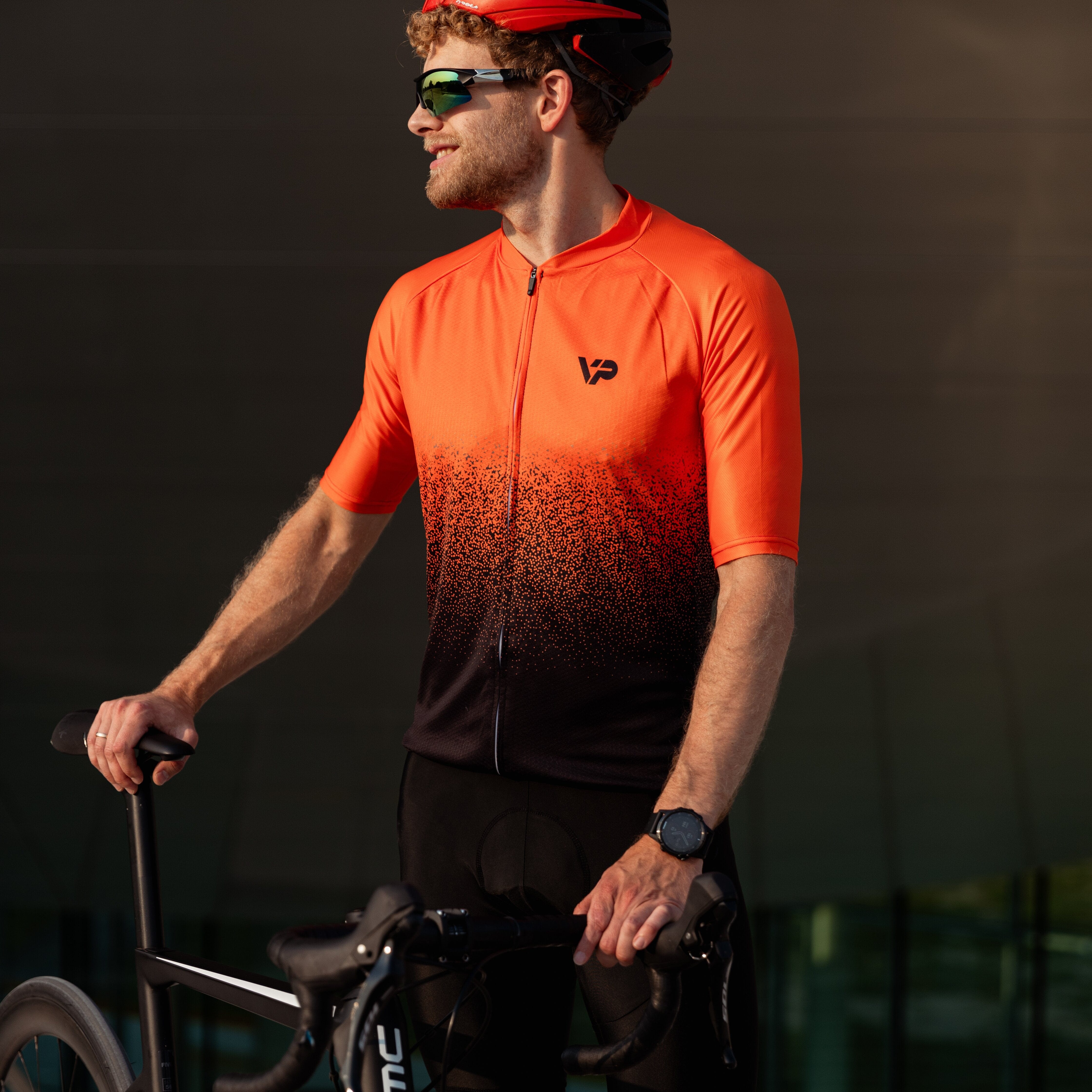
Plus Size vs Big and Tall Cycling Jerseys: What’s the Difference?
A cycling jersey can look good in photos, sound convincing in a product description, and still feel wrong the moment you put it on. For many riders, especially those who are broader through the chest, shoulders, or waist, the difference between a jersey that technically fits and one that actually works on the bike is much bigger than expected.
That difference is rarely about one measurement alone. It usually comes down to how the jersey fits across the three areas that define most of the riding experience: the chest, the shoulders, and the waist. If one of those areas is off, the whole garment can feel unsettled. The zipper may not sit flat. The sleeves may feel awkward. The front may ride up. The back pockets may pull strangely once they are loaded. Even when the problem appears minor in one place, it often affects the rest of the jersey in ways that become more obvious over time.
This is why fit matters so much more than riders sometimes assume. A cycling jersey is not just casual sportswear with a zipper and rear pockets. It is a technical garment designed to move with the body in a forward-leaning position, often for hours at a time. That means balance matters. A jersey should feel connected from top to bottom. It should not feel perfect in one area and compromised in the others.
For riders who want options designed with more accommodating proportions, this collection of big and tall cycling clothing is a useful place to start.
Fit should be judged on the bike, not just in the mirror
One of the most common mistakes riders make is evaluating jersey fit while standing upright. In that position, a lot of jerseys seem acceptable. The chest looks close but manageable. The shoulders feel reasonable. The waist does not appear too tight. So the rider assumes the fit is correct.
Then they get on the bike.
Suddenly the front shortens, the shoulders start doing more work, the chest panel feels more stretched, and the waist becomes more noticeable because the whole garment is now under slightly different tension. A jersey that looked sharp in front of a mirror can become frustrating within minutes once posture starts exposing the weak points in the cut.
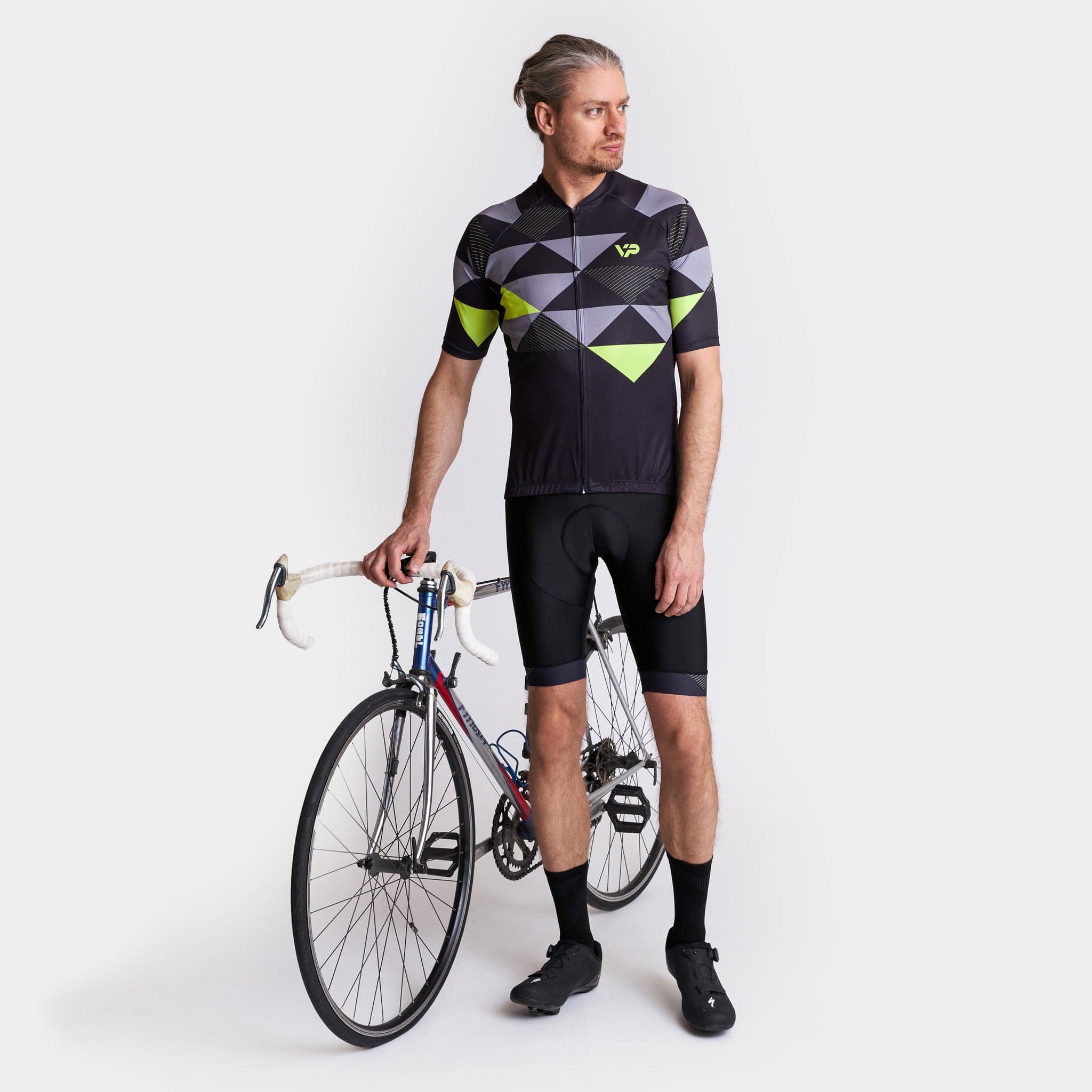
This matters because cycling fit is dynamic. It has to work not just when the body is still, but when it is reaching forward, settling into the bars, breathing harder, shifting weight, standing on climbs, sitting back down, and reaching for rear pockets. The chest, shoulders, and waist all interact differently when those movements happen. That is why a jersey should always be judged by how it feels in riding position, not just by how it appears at rest.
The best fit is the one that still feels right once the body begins to do what cyclists actually do.
The chest should feel supported, not flattened
Chest fit is often the first thing riders notice because it shapes the entire front of the jersey. If the chest is too tight, the signs usually show up quickly. The zipper may bow outward. The fabric may pull from the chest toward the underarm. Breathing may feel slightly restricted, especially when effort increases. The jersey may look sleek at first, but it starts to feel strained as soon as the rider begins moving.
A good chest fit should feel supportive without feeling compressed. The fabric should sit close enough that the jersey feels stable and purposeful, but not so close that the front panel appears to be working too hard. You should be able to zip the jersey fully without that sense of tension across the sternum that makes the whole garment feel overly ambitious.

This is especially important for riders with a larger chest or broader ribcage. A lot of jerseys are designed around a narrower upper-body template, so riders who are naturally broader often discover that the chest becomes the first place where the garment starts to feel wrong. Sometimes this is paired with shoulder restriction. Sometimes it shows up mainly through the zipper line. Either way, it is usually a sign that the jersey is not proportioned properly for the body wearing it.
The right chest fit should make the front of the jersey look calm. Not loose, not stretched, just calm.
Breathing room matters more than riders think
Chest fit is not only about appearance. It also affects breathing, especially once the pace rises or the ride gets longer. A jersey that feels only slightly close at the start can become more noticeable once the rider is breathing more deeply on climbs or during harder efforts.
This is one of the reasons close-fitting jerseys sometimes get misjudged. A rider may put one on, feel that it seems “performance-oriented,” and assume that slight pressure in the chest is normal. But a jersey should not make breathing feel subtly more difficult. It should move with the ribcage, not resist it.
The best fabrics help here, but fabric cannot fully solve a poor chest fit. If the cut is too narrow through the upper torso, stretch may hide the issue briefly, but it usually becomes noticeable over time. That is why chest fit should always be judged not only by whether the zipper closes, but by whether the jersey still feels easy to wear once the rider is actually working.
If the front of the jersey makes the rider too aware of each deep breath, the fit is probably not as good as it first seemed.
The shoulders determine whether the jersey feels natural in motion
Shoulders are often overlooked when riders talk about jersey fit, but they are one of the most important areas in the whole garment. A cycling jersey is worn in a position that constantly asks the shoulders to move and stabilize. If the shoulder fit is wrong, the entire jersey tends to feel less natural.
A good shoulder fit should feel aligned and unforced. The seams should sit where they belong. Reaching forward to the bars should not create the sense that the jersey is being dragged out of shape. The upper body should feel free to move without any pulling from the neck, chest, or sleeves.
When the shoulders are too tight, the signs can be subtle at first. The jersey may seem acceptable while standing, but once the rider leans forward, the seams begin to pull inward or backward. The upper chest may feel tense. The sleeves may seem shorter or more restrictive than expected. Sometimes the rider notices general discomfort without immediately recognizing that the problem originates in the shoulders.
For riders with broader shoulders, this is especially common. Many jerseys widen as sizes increase, but not always in a way that properly accounts for shoulder width and forward reach. The result is a garment that seems to have enough room overall but still feels structurally wrong through the upper body.
A jersey that fits well at the shoulders usually feels better everywhere else too, because the rest of the garment is not being pulled out of its intended position.
Shoulder fit and sleeve fit are closely connected
It is hard to separate shoulders from sleeves because the two work together. If the shoulders are wrong, the sleeves often feel wrong too. A jersey with tight shoulders may make sleeves feel shorter, more restrictive, or more awkward on the upper arms. A jersey with dropped or poorly aligned shoulders may make the sleeves feel loose or unstable, even if the actual sleeve opening is not overly large.
This is why riders should pay attention to the whole upper-body shape rather than treating each part in isolation. A sleeve that seems uncomfortable may not be a sleeve problem at all. It may be the shoulder line forcing the fabric into the wrong position.
Good upper-body fit feels coherent. The shoulders sit naturally, the sleeves stay in place, and the rider does not feel as though the jersey is pulling from one point to another every time they reach forward. This creates a much more stable and confident feeling on the bike, especially on longer rides where small tensions become more noticeable.
The upper body should feel supported, not negotiated with.
The waist should stabilize the jersey, not fight the rider
Waist fit is one of the most misunderstood aspects of a cycling jersey because riders often confuse a snug waist with a correct waist. In reality, a good waist fit should provide stability without creating pressure or distortion.
A jersey that is too tight at the waist often reveals itself through the lower front panel. The zipper loses its clean line, the front feels like it is being pulled upward, and the hem starts to creep out of position. This is especially common for riders who carry more size through the stomach or who simply need a little more room in the lower torso. The garment may technically fit elsewhere, but the waist turns it into a constant source of low-level irritation.
A jersey that is too loose at the waist creates different problems. It may feel comfortable at first, but it can lose structure, especially once the rear pockets are loaded. The body of the jersey may move around too much or look less intentional than it should.
The best waist fit sits between those extremes. It gives the jersey enough anchor to feel stable, but not so much that the rider feels squeezed or forced into a shape the garment expects. It should work with the body rather than trying to correct it.
For many riders, especially broader ones, that distinction makes a much bigger difference than they realize.
Waist fit affects the whole front of the jersey
The waist is not just the bottom edge of the jersey. It influences how the entire front panel behaves. If the waist is too tight, the front starts pulling upward, which changes how the chest feels, how the zipper sits, and how the rear of the jersey balances once pockets are filled. The rider may think the issue is general tightness, but often the lower portion of the garment is what is destabilizing everything else.
This is why the stomach and waist area deserve more attention than riders usually give them. A lot of jerseys that seem acceptable in the chest and shoulders still fail because the lower torso does not have enough usable room. The result is a jersey that is always slightly under tension and never quite settles.
A well-fitting waist allows the rest of the jersey to behave more calmly. The front stays smoother. The zipper looks better. The rear pockets sit more naturally. The rider stops feeling the need to adjust the garment after every change in posture.
That sense of calm is often the clearest sign that the waist fit is correct.
Broad riders often need better proportion, not just a bigger size
One of the most frustrating things for broader riders is that simply sizing up does not always solve the problem. A larger size may provide more room somewhere, but it may not improve the actual proportions that matter across the chest, shoulders, and waist.
A rider with a large chest and broad shoulders may size up and still find that the waist feels oddly narrow or that the sleeves are off. A rider who needs more room at the waist may go up a size only to discover that the shoulders are now too loose while the front still feels short in riding position. These are not random annoyances. They are signs that the jersey has been scaled up rather than properly proportioned.
That is why better fit often comes from better patterning rather than simply a bigger label. Broader riders usually need a jersey that understands how chest, shoulders, and waist relate to one another. More width in one area without corresponding balance in the others often just shifts the problem around.
The most successful jerseys for broader builds tend to feel harmonious. No single area is doing too much work. The chest is comfortable, the shoulders are free, and the waist is supportive without being severe. That is what proportion looks like in practice.
The zipper tells you a lot about overall fit
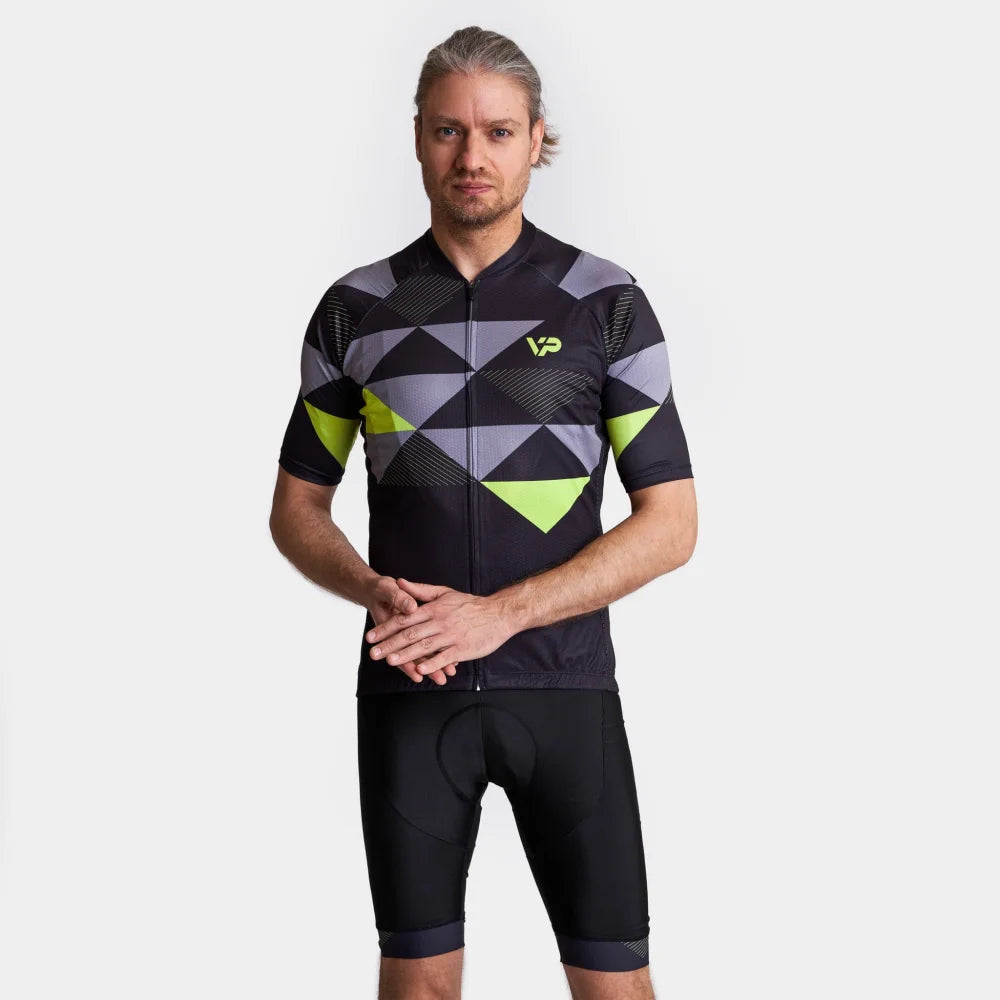
If you want one quick visual clue about whether the chest, shoulders, and waist are working together properly, look at the zipper. A well-fitting jersey usually has a zipper line that stays relatively clean and flat. Not perfectly rigid, because bodies move, but generally calm.
When the zipper bows outward, waves, or looks obviously tense, it usually means something in the fit balance is off. The chest may be too tight. The waist may be pulling the front panel out of position. The shoulders may be creating upward tension that changes the front line. Sometimes it is one issue, sometimes several at once.
This makes the zipper a useful diagnostic tool. It does not tell the whole story, but it often reflects how well the main fit zones are cooperating. If the zipper looks strained, the rider will usually feel that strain somewhere too.
The goal is not to chase a perfectly flat showroom look. The goal is a jersey that appears and feels composed once it is worn by a real body in a real riding posture.
Common Cycling Jersey Sizing Mistakes Bigger Riders Make
Best Fabrics and Features in a Cycling Jersey for Big and Tall Riders
What to Wear on Long Rides if Standard Cycling Jerseys Feel Too Tight
How a Cycling Jersey Should Fit Across the Chest, Shoulders, and Waist
Plus Size vs Big and Tall Cycling Jerseys: What’s the Difference?
Cycling Jersey Fit for Men With a Bigger Belly: What Actually Works
Race Fit vs Relaxed Fit: Which Cycling Jersey Is Better for Bigger Men?
Tall Cyclist Problems: How to Find a Jersey That Is Long Enough
4XL, 5XL, 6XL Cycling Jersey Guide: How to Pick the Right Size
How to Choose a Cycling Jersey for Bigger Riders
Big and tall cycling jersey collection
Pocket stability depends on fit balance
Rear pockets are often thought of as a separate feature, but they are strongly affected by how the chest, shoulders, and waist fit. If those areas are not balanced, the pockets tend to reveal it quickly.
When the waist is too tight or the front is too short, the back panel may feel pulled, which can make pockets sit too high or feel awkward once loaded. When the upper body fit is unstable, the rider may notice the entire jersey shifting slightly as pocket contents move. When the whole garment is too loose, pockets may sag instead of staying supported.
This matters because pocket function is part of real-world fit. A jersey is not only supposed to look right while empty. It is supposed to carry what cyclists actually bring on rides. If the chest, shoulders, and waist are balanced properly, the rear of the jersey usually feels more stable too.
That is another reason why holistic fit matters more than isolated measurements. The best jersey is not the one that checks a few boxes individually. It is the one that still works as a system once everything is in use.
Different riding styles may change what “right” feels like
Not every rider wants the same fit, even when body shape is similar. Someone who prefers short, harder efforts may like a closer feel through the chest and waist than someone doing long endurance rides. Another rider may prioritize all-day comfort and choose a jersey that allows a little more freedom through the body. Neither approach is wrong.
What matters is that the jersey still respects the basic principles of good fit. The chest should not feel compressed. The shoulders should not feel restricted. The waist should not destabilize the garment. A rider may choose a cleaner or more forgiving silhouette, but those core standards still apply.
This is useful because it helps separate preference from dysfunction. A rider can prefer a close fit without accepting pressure as normal. Another can prefer a more relaxed fit without giving up structure. The right answer depends partly on what kind of rides the jersey is meant for, but every good answer still begins with balance across the main fit zones.
The best-fitting jersey disappears during the ride
A jersey that fits badly tends to keep announcing itself. The chest feels too aware of the zipper. The shoulders keep tugging when the rider reaches forward. The waist feels like it is either squeezing or floating. Small corrections turn into constant management.
A jersey that fits well does the opposite. It fades into the ride. The rider stops thinking about the front panel. The shoulders move naturally. The waist stays stable without becoming a pressure point. The garment simply works.
That is the standard riders should aim for, especially if they have spent years assuming that mild discomfort is just part of cycling clothing. It is not. A well-fitting jersey should feel technical and purposeful, but not punishing. It should support performance without making the rider too aware of it.
Once you experience that kind of fit, it becomes easier to recognize how much difference a balanced chest, shoulder, and waist fit really makes.
Final thoughts
How a cycling jersey should fit across the chest, shoulders, and waist is not a matter of fashion preference alone. These three areas determine whether the garment feels stable, natural, and functional once the rider is actually on the bike.
The chest should feel supportive without flattening or restricting breathing. The shoulders should allow natural movement and keep the upper body aligned in riding position. The waist should stabilize the jersey without pulling it out of shape or creating pressure that spreads through the rest of the garment. When those three areas work together, the whole jersey feels calmer, more refined, and much easier to ride in.
That is the difference between a jersey that merely fits on paper and one that truly fits in practice. And for many riders, especially broader ones, that difference is exactly what turns cycling clothing from a compromise into something that finally feels right.